What does Copenhagen look like at Christmas?
Copenhagen is the capital of Denmark, a city by the sea with canals, bridges and colorful houses. In December, the masts of the boats on the Nyhavn canal are wrapped in fairy lights, and on Strøget, one of the longest pedestrian streets in Europe, the shop windows are full of toys and decorations.
At Amalienborg Palace, where the royal family lives, a big Christmas tree is lit, and the royal guards stand watch in front of it in their tall black bearskin hats.
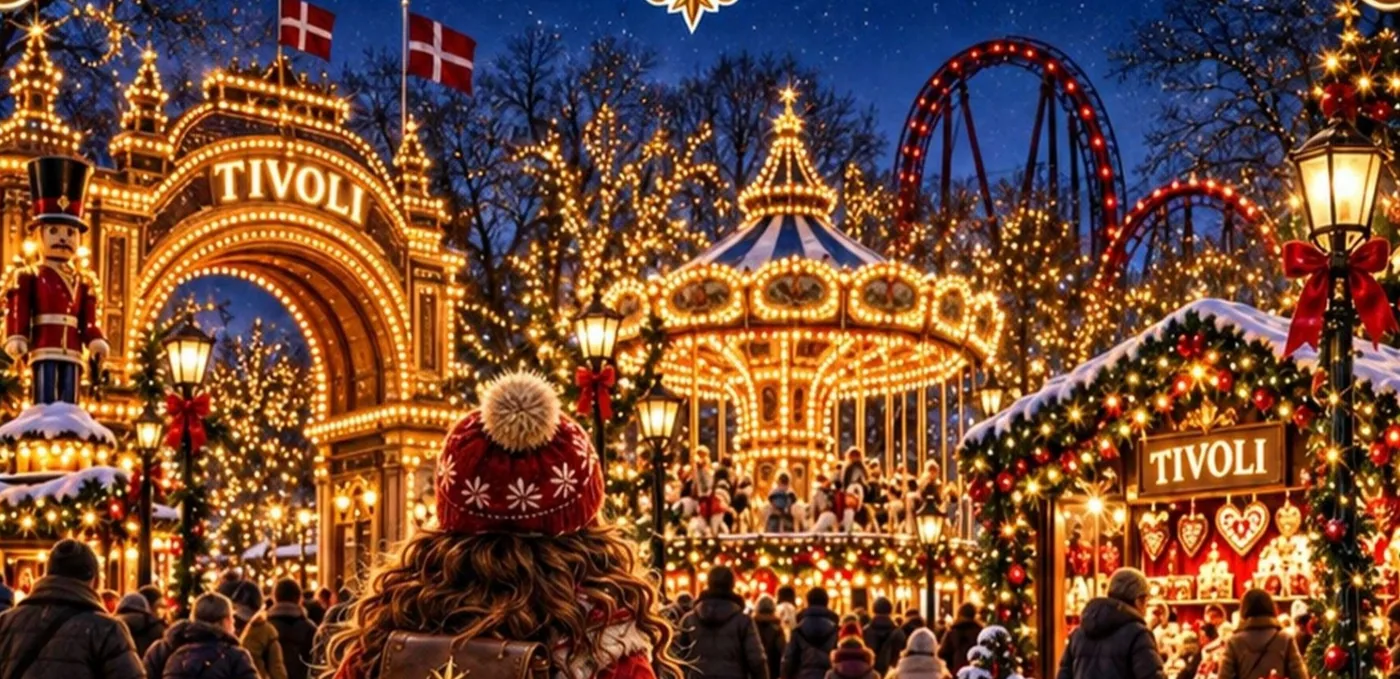
Tivoli, the Christmas garden
In the heart of the city are the Tivoli Gardens, an amusement park opened in 1843, one of the oldest in the world. In winter, Tivoli fills with thousands of lights, wooden stalls selling sweets and decorated fir trees. The carousel spins, a roller coaster climbs above the trees, and families warm up with hot chocolate.
What are paper hearts?
Paper hearts, called in Danish julehjerter, meaning “Christmas hearts”, are the best-loved Danish decoration. They are made from two strips of paper, usually one red and one white like the Danish flag, woven through each other until they form a checkered heart.
The heart has a handle, like a little basket, so it can hang on the tree or in the window. Many children put a small surprise inside: a sweet, a note or a wish for someone they love. In December, many Danish families gather around the table and weave hearts together.
What can children do in Copenhagen?
- Stroll through Tivoli, ride the carousel and watch the lights reflected in the garden’s lake.
- Take a boat trip along the canals, past the colorful houses of Nyhavn.
- See the royal guards at Amalienborg Palace, in front of the big tree.
- Buy a woven heart at a Christmas market, or learn to make one themselves.
Two Danish Christmas traditions
Dancing around the tree
On the evening of 24 December, after dinner, the family holds hands and dances in a circle around the tree, singing carols. The tree is decorated with paper hearts, fairy lights and little red-and-white Danish flags, called Dannebrog.
Lucia on the canals
On 13 December, Saint Lucia’s Day, kayaks decorated with lights paddle along the canals of Copenhagen, followed by a boat full of choir singers. The tradition comes from Sweden, and the Danes have turned it into a parade on the water.
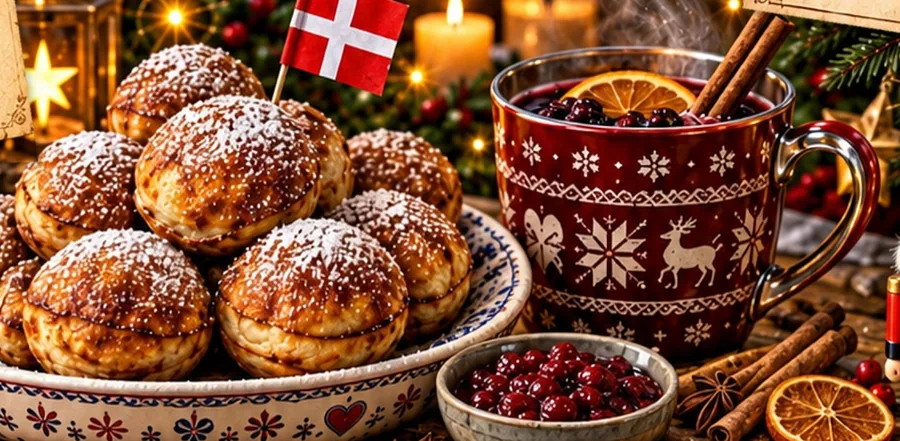
A taste of Denmark: Æbleskiver
How do you say “Merry Christmas!” in Danish?
Glædelig jul!
Try saying it at dinner on Christmas Eve.
What word did Mira discover here?
In each of the eleven cities of the journey, Mira finds a special word. The word from Copenhagen is written in her Christmas passport, at the end of chapter 6.