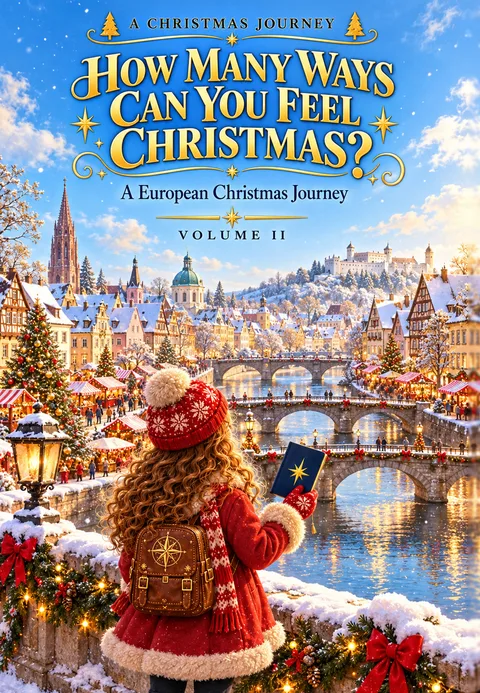
What does Dresden look like at Christmas?
Dresden is a city in eastern Germany, on the Elbe river. It has honey-colored stone domes and towers and old bridges that shine over the dark water. In the middle rises the round dome of the Frauenkirche, like a bell set over the city.
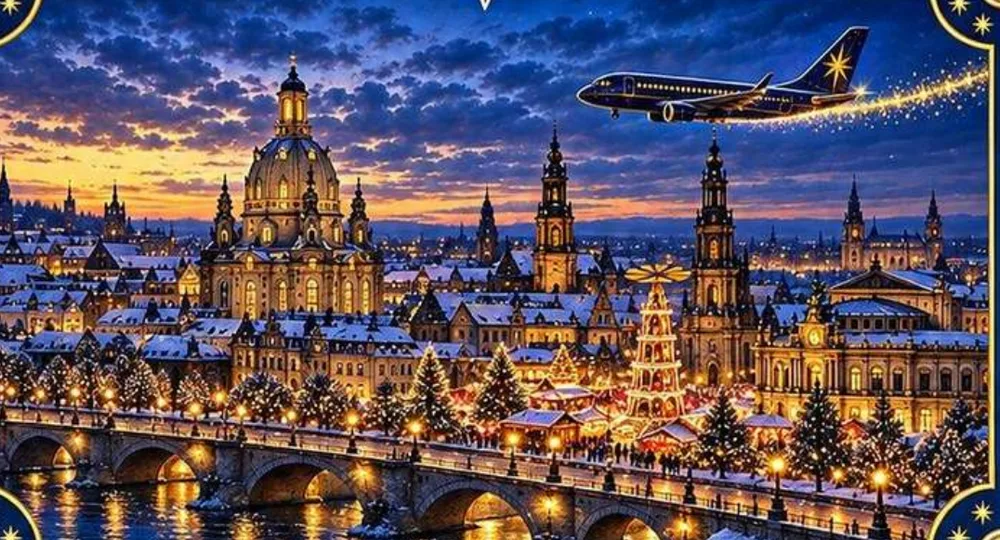
The Striezelmarkt in the Old Market Square
The Striezelmarkt was first mentioned in 1434 and is one of the oldest Christmas markets in Germany. Its name comes from Striezel, an old word for Stollen. In the middle of the square stands a huge Christmas pyramid, with tiers of carved figures turning slowly under a wheel of big wooden blades. The market usually runs from late November to Christmas Eve.
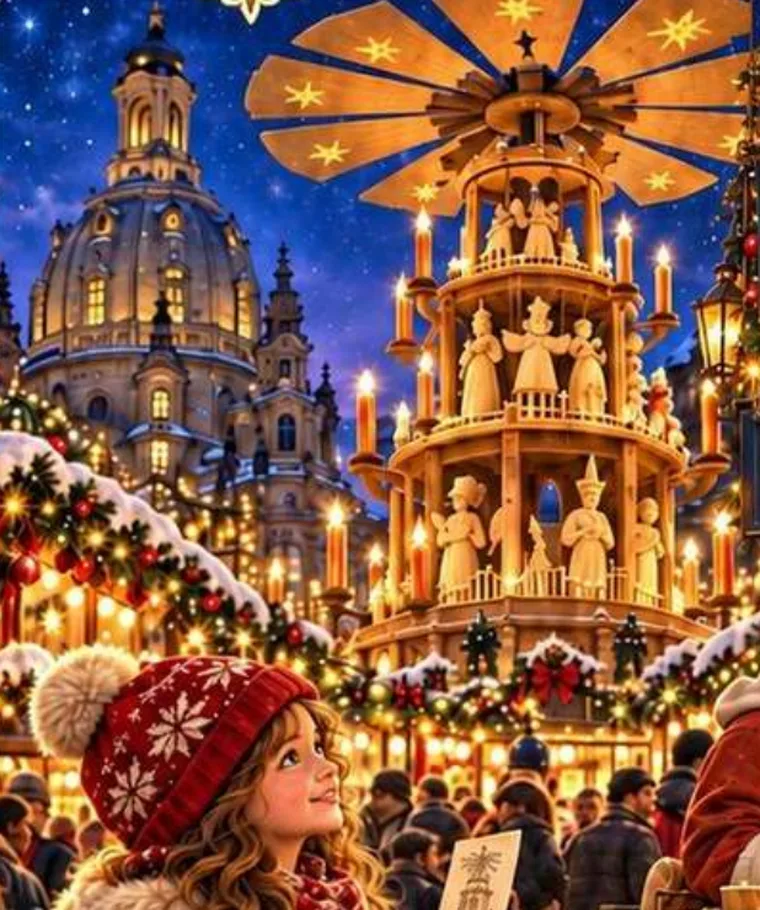
What do you find at the market?
- Nutcrackers in brightly colored uniforms.
- Smoking men, little wooden figures that puff a thread of scented smoke from their mouths.
- Candle arches and figures turned from pale wood.
- Prune chimney sweeps, little figures given as gifts for luck.
What can you do at the market?
- Look at the big pyramid, more than 14 meters tall, and count the tiers as they turn.
- Stop at a stall of wooden things and watch a woodturner shape a figure out of fresh shavings.
- Walk along the Brühl Terrace above the Elbe, where the bridge lanterns sparkle on the water.
- Try Kinderpunsch, a warm punch for children, made of fruit juice, tea and spices, with no alcohol.
Two Christmas customs from the Ore Mountains
Candle arches in the windows
Many say the arch-shaped candle holders, called Schwibbögen, remember the miners of the Ore Mountains, who longed for daylight in winter. Today they shine in many windows across the city.
The lucky chimney sweep
The Pflaumentoffel is a little chimney sweep made of dried prunes, with a paper face, a top hat and a tiny ladder. People give it as a good-luck charm.
A taste of Dresden: Christstollen
Christstollen is a soft sweet bread with raisins, orange peel and almonds, dusted with sugar. A good Stollen rests for weeks before Christmas. A recipe for little quark Mini-Stollen, to make together with an adult, is in the book.
How do you say “Merry Christmas!” in German?
Frohe Weihnachten!
Try saying it at dinner on Christmas Eve.
What word did Mira discover here?
In each of the eleven cities of the second journey, Mira finds a special word. The word from Dresden is written in her Christmas passport, at the end of chapter 3.